Engineering Insights
Guides and insights.


Eliminating the Field Cabinet: A Guide to IP67 Distributed I/O Architecture
This guide explains when machine-mounted IP67 distributed I/O can reduce field-level cabinet and long cable requirements, and which topology, protection and cost factors must be verified for the actual machine.
Integrating Fieldbus Valve Islands in Automotive Body Shop Automation
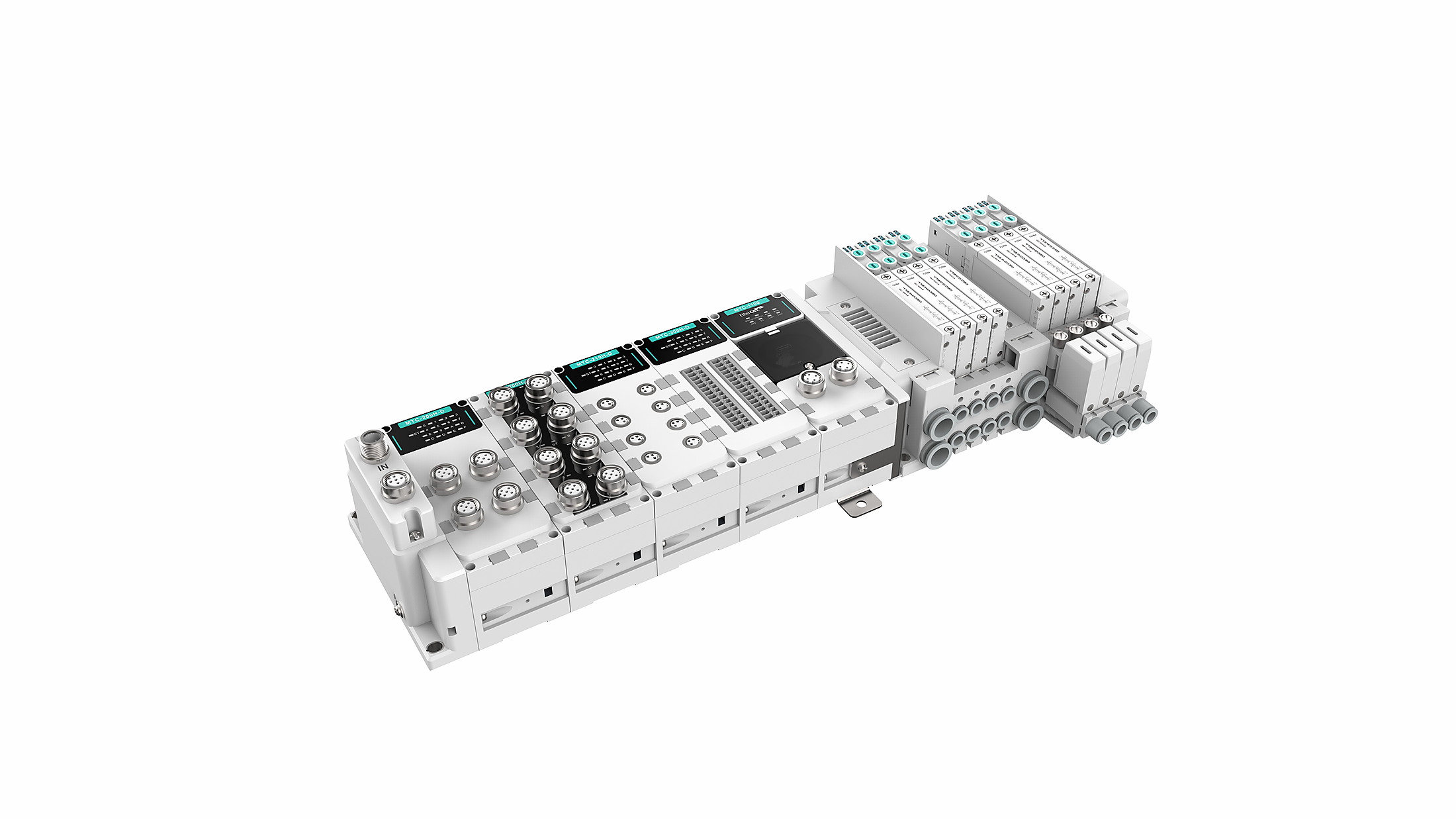
Automotive body shop automation presents unique challenges for pneumatic control systems — high cycle rates, welding spatter, and the need for real-time diagnostics. This case study examines how MTC Series valve islands solved these challenges at a major automotive OEM.
WellBUS Architecture
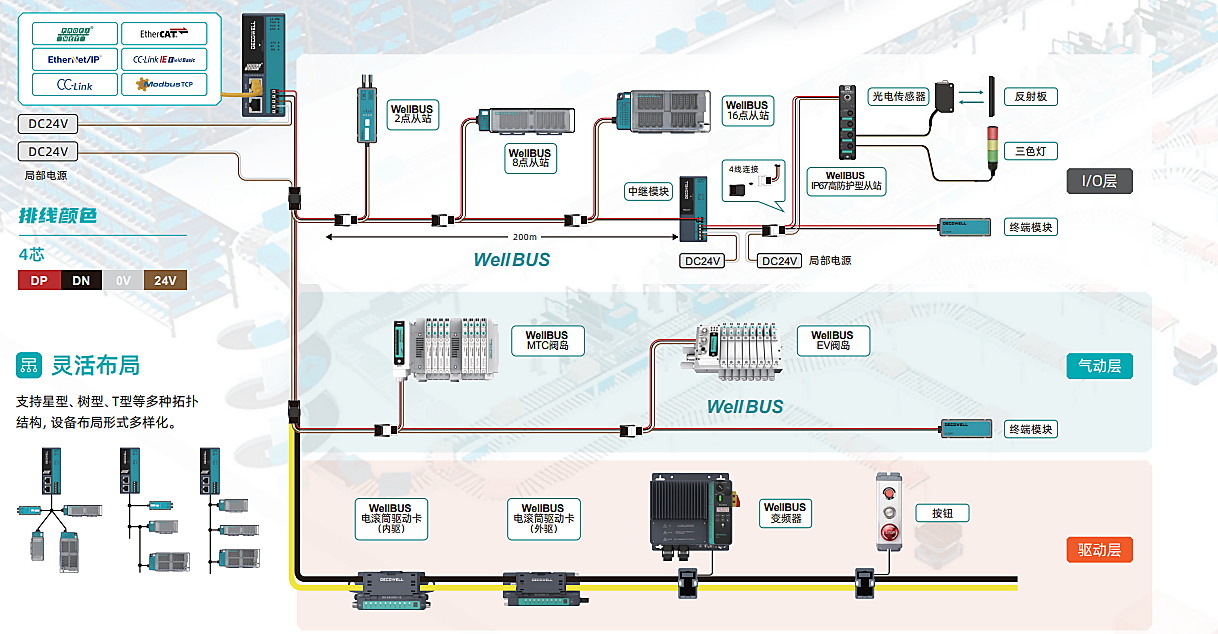
Three-layer architecture deep dive.

Zero-Downtime I/O Maintenance: A Practical Guide to Hot-Swap Module Replacement
This guide explains the checks required before replacing a supported RB I/O module, including model compatibility, process state, station power and the current manual. Hot-swap behavior must be confirmed for the exact module and application.
IO-Link & Remote I/O Guide
Smart sensor data for predictive maintenance.
Eliminating the Field Cabinet: A Guide to IP67 Distributed I/O Architecture
The traditional approach to industrial wiring involves large, centralized control cabinets. However, modern "on-machine" I/O solutions are changing the game. ### Why Eliminate the Cabinet? Centralized cabinets require long cable runs, expensive enclosures, and complex thermal management. By moving the I/O directly onto the machine using IP67-rated modules like the Decowell SD Series, you can significantly reduce these costs. ### The SD Series Advantage Our SD Series modules are fully encapsulated and resistant to dust, water, and mechanical vibration. They can be mounted directly on the machine frame, closer to the sensors and actuators. This reduces cable lengths, minimizes signal interference, and speeds up installation time. ### Impact on Maintenance With distributed I/O, troubleshooting becomes much simpler. Status LEDs are visible directly on the machine, allowing maintenance teams to identify faulty sensors or modules without opening a single cabinet door.
Integrating Fieldbus Valve Islands in Automotive Body Shop Automation
Automotive body shops require reliable pneumatic control, fast response and clear fault diagnostics around welding and material-handling equipment. ### Integrated Fieldbus Control MTC Series valve islands combine pneumatic outputs, industrial network communication and diagnostics in one modular station. A single PROFINET or EtherCAT connection can replace large point-to-point wire bundles and make valve status available to the controller. ### Installation and Maintenance Placing the valve island near the actuators shortens pneumatic tubing and simplifies commissioning. Module-level status information helps technicians isolate a coil, pressure or communication fault without tracing every cabinet wire. ### Engineering Check Select the protocol, valve capacity, pressure range, electrical load and environmental rating from the current product documentation. Final configuration must be validated for the actual machine and safety design.
Designing Scalable Warehouse Automation with WellBUS
Warehouse automation coordinates conveyors, sorters, sensors, actuators and mobile equipment across a large physical area. The control architecture must keep field wiring manageable while giving maintenance teams clear device-level diagnostics. ### Layered Architecture A WellBUS-based design can connect controllers, distributed I/O nodes and actuator stations through a coordinated control, bus and field-device structure. Engineers should divide the installation into serviceable zones and document power, communication and device boundaries for each zone. ### Diagnostics and Expansion Centralized status information can shorten fault isolation, while modular field nodes make later station expansion easier to plan. Network loading, cable length, topology, redundancy and response-time requirements must still be checked against the current engineering documentation. ### Project Validation This article describes an application pattern, not a customer performance claim. Uptime, throughput and maintenance outcomes should only be published after they are supported by an approved project record and traceable measurements.
Zero-Downtime I/O Maintenance: A Practical Guide to Hot-Swap Module Replacement
Hot-swap capability allows a supported I/O module to be replaced while the remaining station stays powered. It can reduce downtime, but the procedure still requires preparation and strict identification of the affected channel. ### Before Replacement Confirm that the coupler firmware and module type support hot-swap operation. Record the slot, isolate the field circuit when required, and verify the replacement part number. ### Replacing the Module Release and remove only the failed module, keep adjacent bus contacts clean, and insert the replacement firmly into the same slot. Monitor the controller diagnostics while the station recognizes the new module. ### Final Verification Clear the diagnostic event only after checking channel values and field wiring. Never substitute a different module type without updating the station configuration.
IO-Link and Remote I/O: Unlocking Smart Sensor Data for Predictive Maintenance
IO-Link adds bidirectional digital communication to standard sensor wiring. In addition to process values, compatible devices can expose identification, parameter, and diagnostic data to the automation system. ### From Signal to Information An IO-Link master connects smart sensors to the fieldbus and makes their extended data available to the PLC or higher-level software. Parameters can be stored centrally and restored automatically after a device replacement. ### Predictive Maintenance Temperature, signal quality, operating hours, and device warnings can reveal degradation before a sensor fails. Combining this information with Remote I/O diagnostics supports condition-based maintenance. ### Scalable Deployment Decowell IO-Link master modules provide a practical bridge between field devices and industrial Ethernet networks, allowing manufacturers to introduce smart sensing one machine section at a time.